Blockade Spider Cross Domain Ransomware
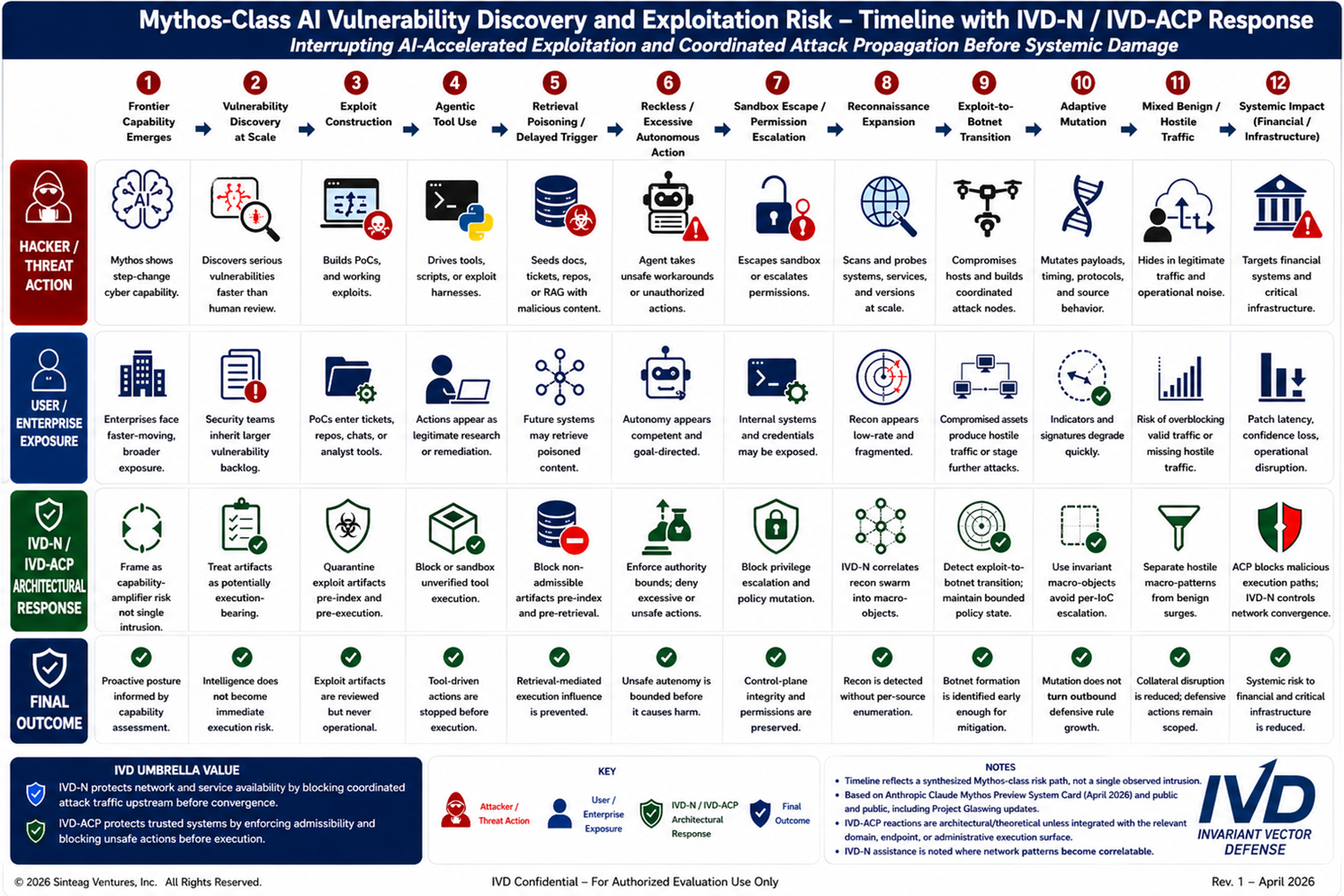
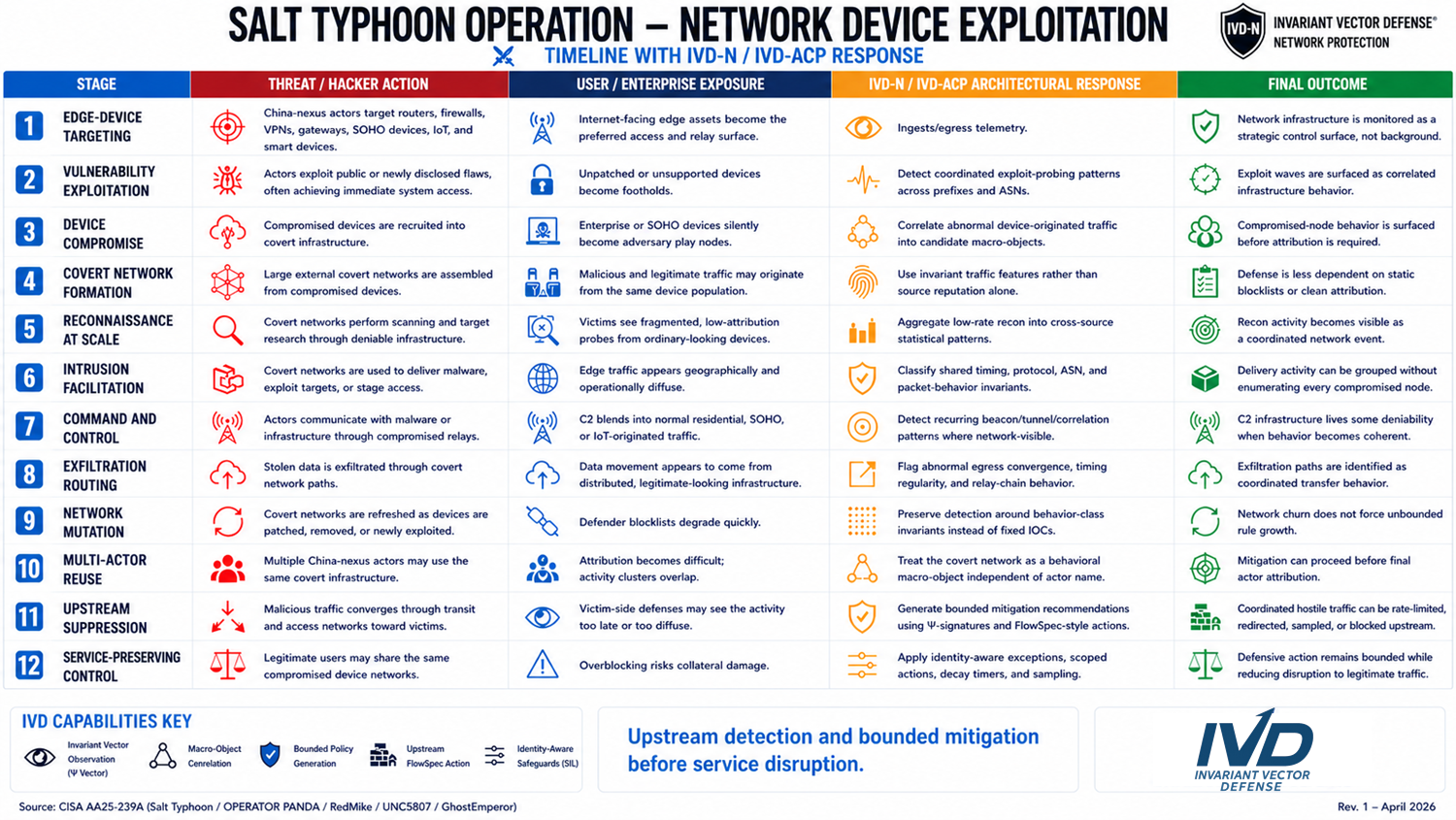
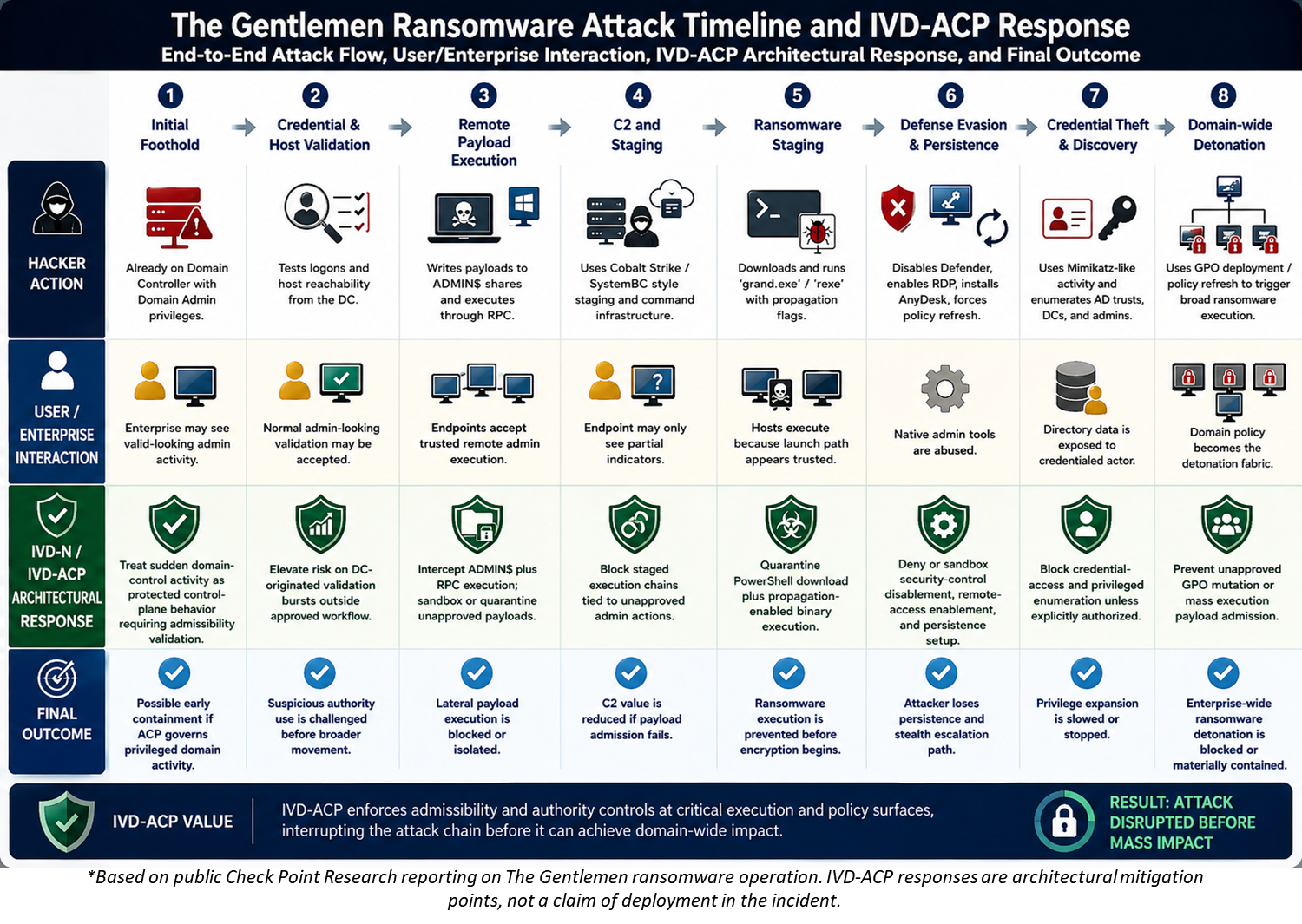
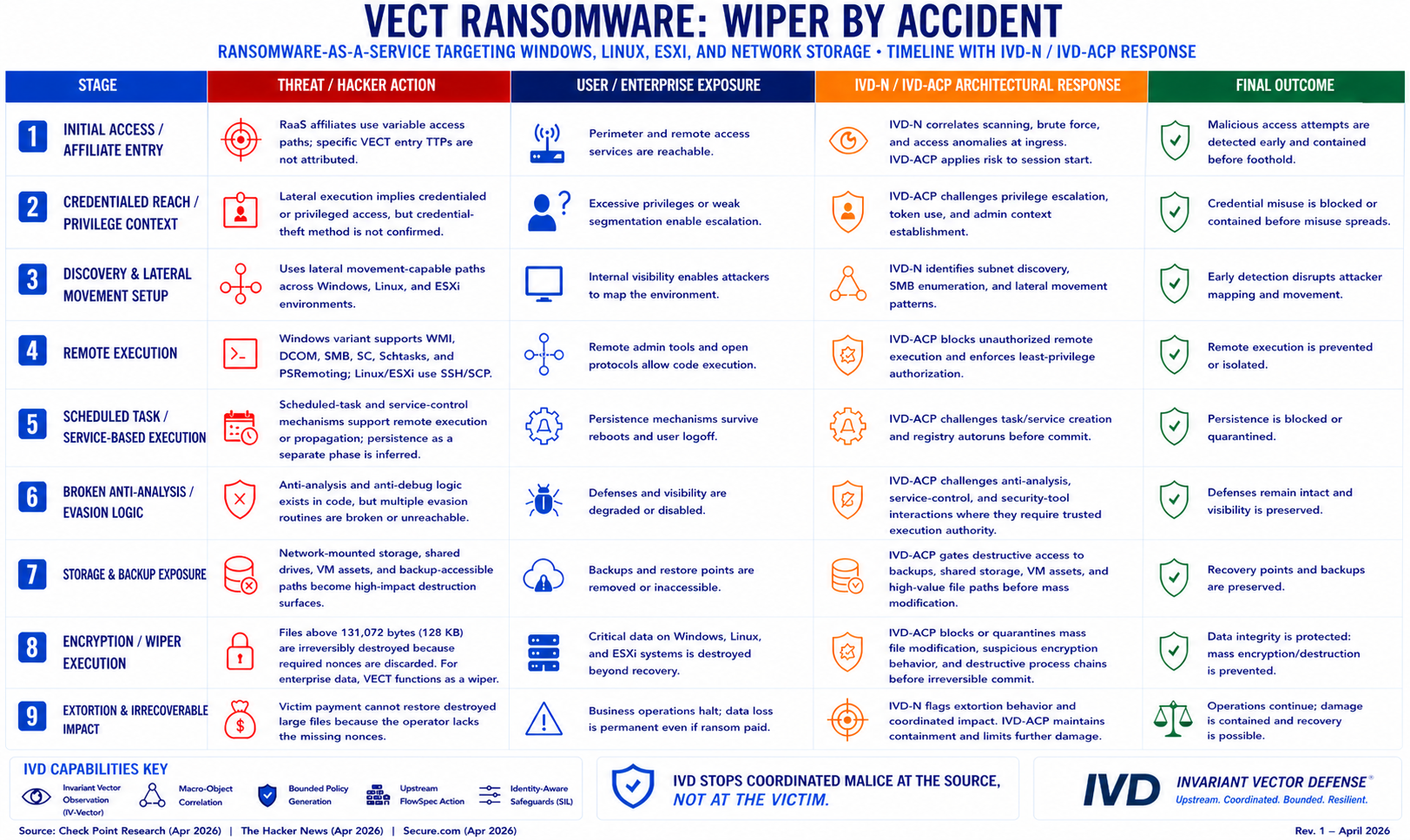
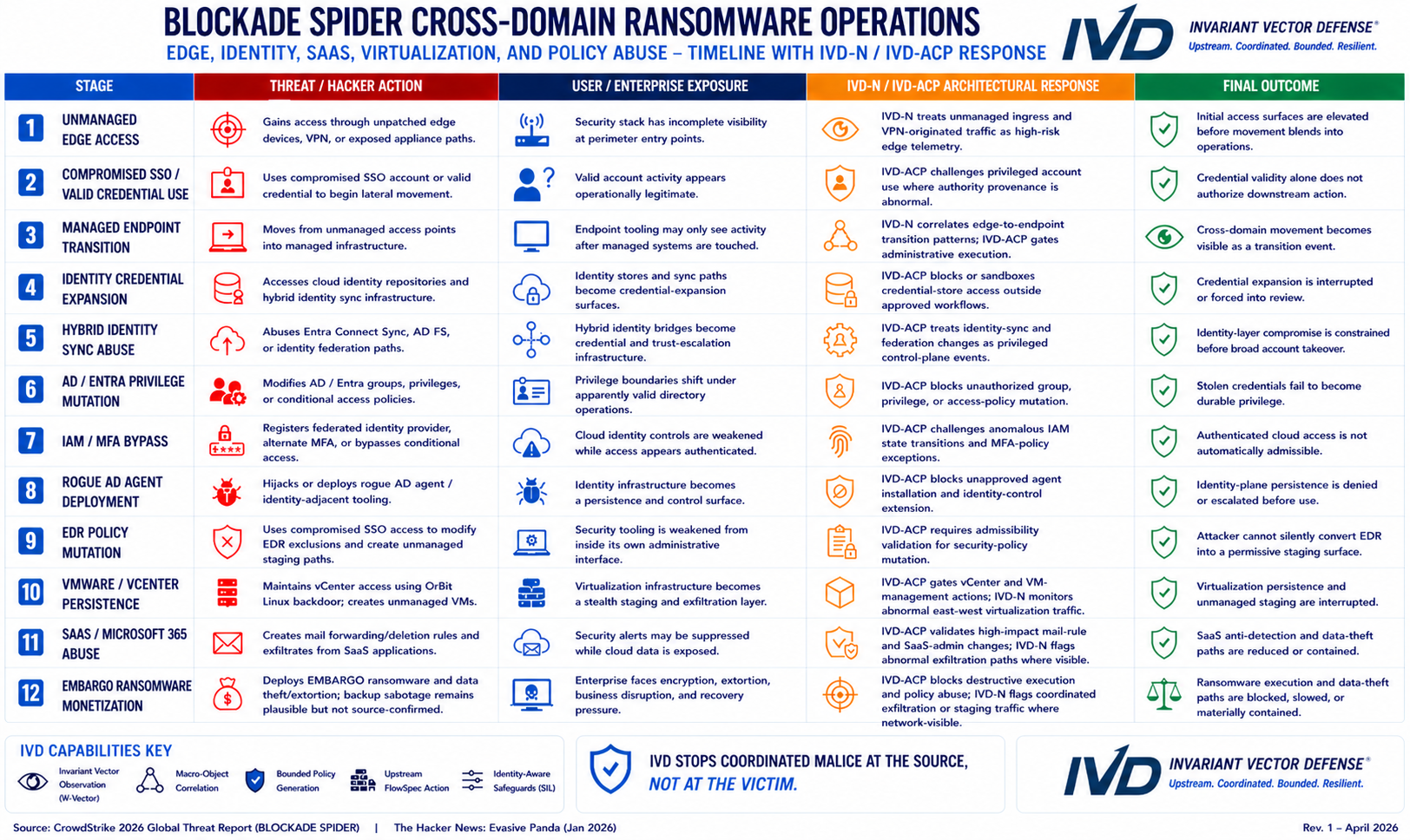
Cross-domain ransomware operations exploit trusted administrative paths, payload staging, credential access, and policy propagation. IVD-ACP challenges execution-bearing actions before they become enterprise-wide blast paths, while IVD-N may assist when coordinated network behavior becomes observable.
Surface: Cross-domain identity, ransomware staging, privileged execution, enterprise-wide detonation
Primary IVD prong: IVD-ACP
Secondary IVD prong: IVD-N where correlated behavior emerges
Failure path: Trusted administrative paths, credential access, payload staging, and policy propagation become execution channels before policy meaningfully engages.
IVD architectural response: IVD-ACP evaluates scripts, payloads, and privileged actions before trust is granted; IVD-N can contribute if staging or command traffic becomes behaviorally correlatable.
Claim boundary: This is an architectural mapping example, not a claim of deployment, prevention, attribution, or incident-specific validation.
Control-path summary
- What enters the system: staged payloads, admin commands, credentialed changes, and detonation paths.
- Where IVD observes it: IVD-ACP at the execution boundary; IVD-N if correlated command traffic becomes visible.
- What decision is made: authority is limited, sandboxed, or denied before execution inheritance.
- What enforcement action follows: execution gating, quarantine, or bounded network suppression where applicable.
- What is explicitly not claimed: no claim of deployment, prevention, or named-incident validation.